

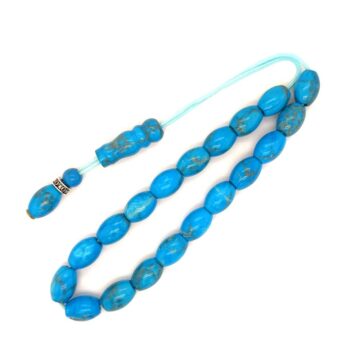
Kombolois howlite (turquoise), oval bead, 19 beads
The use of semi-precious stones is known from the ancient years mainly for the making of amulets, jewels and even for healing purposes. Every semi-precious stone has its own characteristics that differ from the others, such as the colour, the hardness and the brilliance. For the making of komboloys a wide variety of colours and …
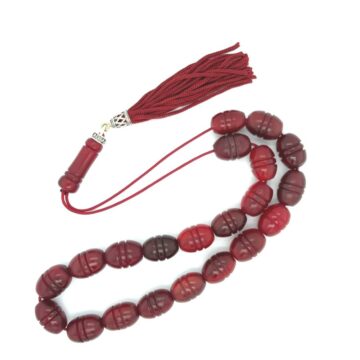
Kombolois Horn red carved with tassel-19 beads
Horn beads are among those with the greatest history in the depths of the centuries. Hundreds of years ago, the horns of various animals were used in the manufacture of objects to meet the needs of people’s daily lives, for ornamental and religious reasons. They made tools, jewelry and on them carved some religious symbols. For the …
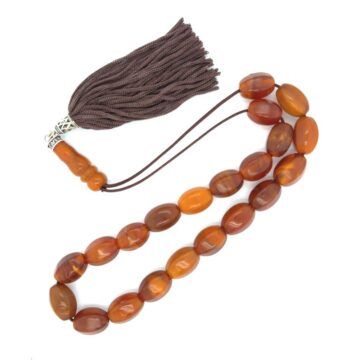
KOMBOLOIS Horn brown tayarized with tassel, 21 beads
The horn beads are included between those with the longer history in the depths of centuries. Hundreds years ago, people used the horns from animals in order to make items for the covering of their daily needs, for decorative but also for religious reasons. They were making tools, jewels that sculptured them with religious symbols. For the …
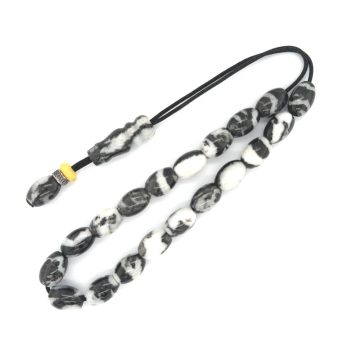
Kombolois Jasper zebra oval bead, 19 beads
The use of semi-precious stones is known from the ancient years mainly for the making of amulets, jewels and even for healing purposes. Every semi-precious stone has its own characteristics that differ from the others, such as the colour, the hardness and the brilliance.For the making of komboloys a wide variety of colours and materials …
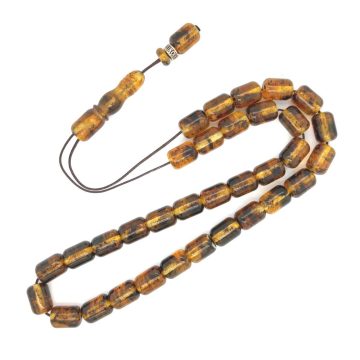
Kombolois pressed amber, 33 beads
The laboratories, which process the amber and create the beads, collect the unexploited amber filings (process remains), as well as the unprocessed amber quantities. Afterwards, they press the above materials into moulds in high temperatures and thus create the pressed amber. Its colour varies, due to the mixed materials, the different pressure and temperature conditions. …
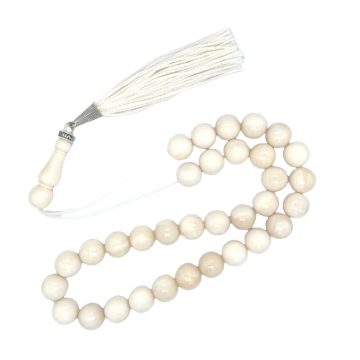
Kombolois camel bone white with tassel, 33 beads
Bone is also used in the making of kombolois. A few centuries ago, people were making jewels and many other items for religious purposes. They were processing bones in a particular way creating thus pieces of art. The bones komboloys are qualitative and durable in use. The bone beads are from cattle animals that live …
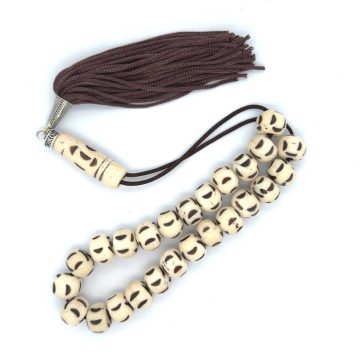
Kombolois carved camel bone white with tassel (25 beads)
Bone is also used in the making of kombolois. A few centuries ago, people were making jewels and many other items for religious purposes. They were processing bones in a particular way creating thus pieces of art. The bones komboloys are qualitative and durable in use. The bone beads are from cattle animals that live …
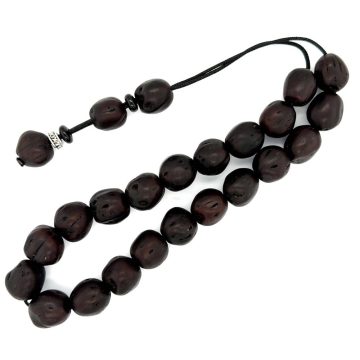
KOMBOLOIS Aromatic fruit, black, 21 beads
The fruits of plants and trees and wood as natural materials began to be used slowly, but the continuation proved that there is a particular interest in rosaries from these materials. Of the fruits of particular interest is the fruit of the Kouka tree that looks like a coconut. It is a fruit of brown …

Kombolois Ebony, 33 beads
The plants and trees seeds and the wood as natural materials started with slow steps to be used in the making of kombolois.One of the most known woods is the Ebony-tree that is considered as the most durable wood. There is no wide variety of colours, but only black and black with brown sheens. It …
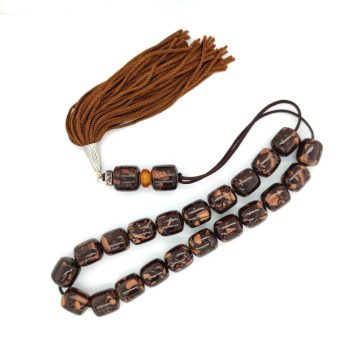
Kombolois Aromatic fruits with cinnamon aroma with tassel, 21 beads
The fruits of plants and trees and wood as natural materials began to be used slowly, but the continuation proved that there is a particular interest in rosaries from these materials. Of the fruits of particular interest is the fruit of the Kouka tree that looks like a coconut. It is a fruit of brown …
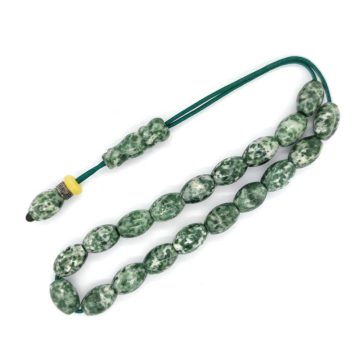
KOMBOLOIS Green spot stone, Oval bead, 19 beads
The use of semi-precious stones is known from the ancient years mainly for the making of amulets, jewels and even for healing purposes. Every semi-precious stone has its own characteristics that differ from the others, such as the colour, the hardness and the brilliance. For the making of komboloys a wide variety of colours and …
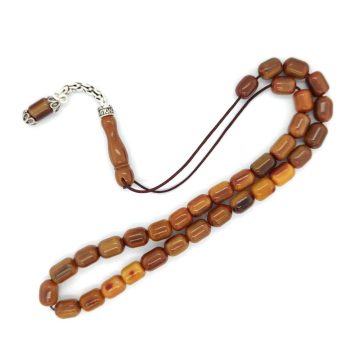
Kombolois Sudurus with silver (925°) tassel, (33 beads)
It is one of the most usual rosaries of the wider Arabian world, used as an expression of their religious faith. The need of the creation of a more durable and economic rosary due to the amber’s high cost, led people to look for new materials for the bead’s manufacturing, which had to be durable, …