

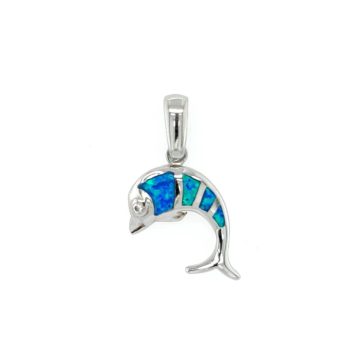
Pendant, silver (925°), Dοlphins with zircon and artificial opal
Pendant made of silver (925°) with dolphins with zircon and artificial opal. The dolphin since ancient times was one of the main subjects of decoration of houses and Currencies. As a symbol of the Olympian gods it had taken a very important place in ancient art as a decorative motif or as an artistic performance.It …
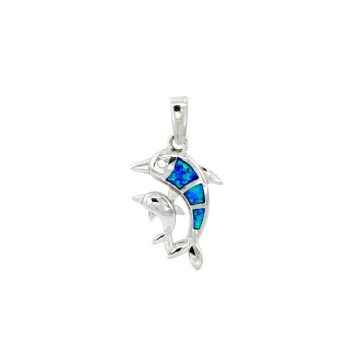
Pendant, silver (925°), Dοlphins with artificial opal
Pendant made of silver (925°) with dolphins and artificial opal. The dolphin since ancient times was one of the main subjects of decoration of houses and Currencies. As a symbol of the Olympian gods it had taken a very important place in ancient art as a decorative motif or as an artistic performance.It can be …
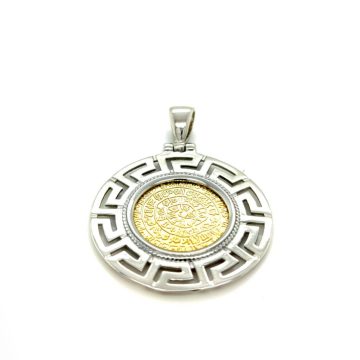
Pendant, silver (925 °), Disc of Phaistos with meander
Women’s pendant made of silver (925 °) with the Disk of Phaistos and a meander wreath. The Disk of Phaistos is a disk of baked clay, which is an archaeological find from the Minoan city of Phaistos in southern Crete and probably dates to the middle or late Minoan Bronze Age. It is one of …
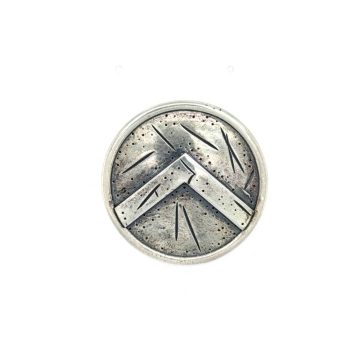
Pendant, Silver (925°), Spartan Shield
Pendant Spartan shield made of silver (925°). The shield is the oldest defensive weapon. Its form as well as its construction was different from place to place and from year to year. At the time of the Peloponnesian War, all Spartan shields had the letter L (lambda) written on them, representing Lacedaemonia.
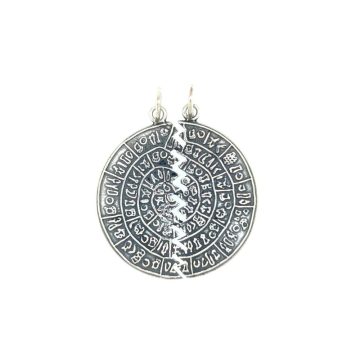
Double pendant Disc of Phaistos, silver (925°)
Double pendant made of silver (925°) with Disc of Phaistos. The pendant easily splits in half so that everyone wears their own pendant. The Disc of Phaistos is a disk of baked clay, which is an archaeological find from the Minoan city of Phaistos in southern Crete and probably dates to the middle or late …
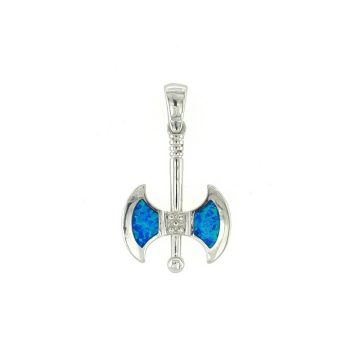
Pendant, silver (925°), Double Minoan ax with artificial opal
Women’s silver pendant (925°) with Double Minoan ax and artificial opal. The double pelecys is a characteristic symbol of the Minoan culture. Double-edged axe, fitted to a wooden handle, with various uses, as a weapon, or even as a sacred tool for beheading animals in sacrifices.
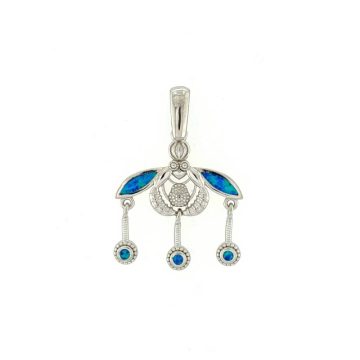
Pendant, silver (925°), Minoan Bee with artificial opal, (2.2 x 2.2 cm)
Women’s silver (925°) pendant with the Minoan Bee and artificial opal. One of the greatest and best-known works of Minoan art is the famous periapto in the shape of two bees dating from 1800 – 1700 BC.
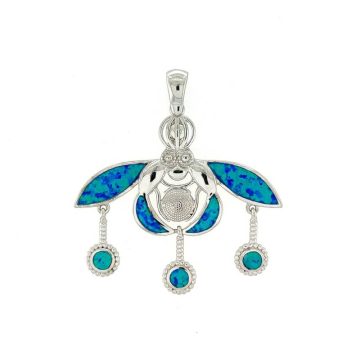
Pendant, silver (925°), Minoan Bee with artificial opal, (4,6 x 4 cm)
Women’s silver (925°) pendant with the Minoan Bee and artificial opal. One of the greatest and best-known works of Minoan art is the famous periapto in the shape of two bees dating from 1800 – 1700 BC.
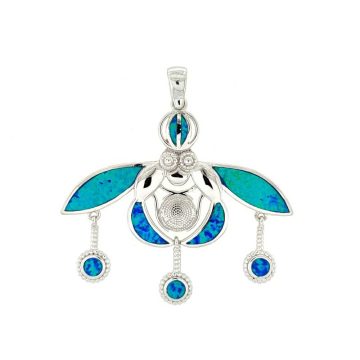
Pendant, silver (925°), Minoan Bee with artificial opal, (5,2 x 4,4 cm)
Women’s silver (925°) pendant with the Minoan Bee and artificial opal. One of the greatest and best-known works of Minoan art is the famous periapto in the shape of two bees dating from 1800 – 1700 BC.
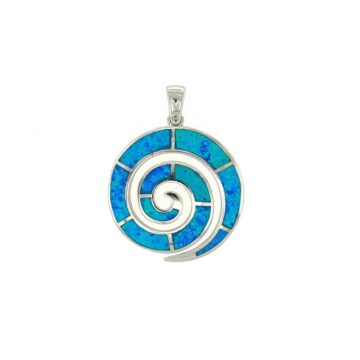
Pendant, silver (925°), spiral with artificial opal
Women’s pendant made of silver (925°) with spiral symbol and artificial opal. The spiral is an Ancient Greek Symbol of Life and is one of the most ancient symbols and has been used since the Paleolithic era in Greece. One of the most mysterious geometric patterns we find on the planet. It has been found …
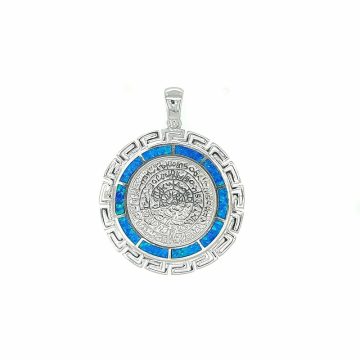
Pendant, silver (925°), Disc of Phaistos with a wreath of meander and artificial opal
Women’s pendant made of silver (925 °) with the Disk of Phaistos and a meander wreath with artificial opal.The Disk of Phaistos is a disk of baked clay, which is an archaeological find from the Minoan city of Phaistos in southern Crete and probably dates to the middle or late Minoan Bronze Age. It is …